
Planning a corporate retreat is a big deal and a big responsibility for whoever is put in charge. Beautiful location, exciting activities, comfortable rooms, appropriate workshop spaces, good food, well-paced agenda, accessible venue, the expectations are usually as high as the budget remains tight.
When there is so much on the line, budgeting an offsite can bring a lot of stress and feel like an intricate puzzle between proposals, fine print, last-minute changes, and cancellation fees; even for the most organized person.
Luckily, no more guessing games; we’ve got data. We crunched our numbers and dug out data from 200+ retreats, 3,100 line items, and over €22 million spent.
In this quick guide, we break down where your money actually goes, what tends to spiral out of control, and how to get the most for your money for offsites that are both epic and on budget. Yes, yes, it’s possible.
After hundreds of retreats, we’ve seen some patterns.
No surprise here, this is where most of your budget goes. Full-board packages (think: rooms, workspace, and meals) usually eat up more than half the budget.

Welcome dinners, special dietary requests, and those extra-long evening drink sessions take second position when it comes to spending. This is money well spent, food is the glue that keeps a team together.

Outdoor challenges, cooking classes, wellness sessions, and guided adventures. Some “extra curriculum activities are essential, whether you are organizing an offsite, a team retreat, or a getaway.

Airport shuttles, group buses, and getting everyone from A to B is an important part of your event.

And finally, last but not to be forgotten, sound systems, strong Wi-Fi, streaming setups, and meeting room gear are key for seamless events.

Once those decisions are made, one would think we can sit back and relax but more often than not… things change.
As it turns out, nearly a quarter of all line items get changed, added, or tweaked between the first proposal and the final plan.
The graph below shows which category gets the most modifications mid-planning.
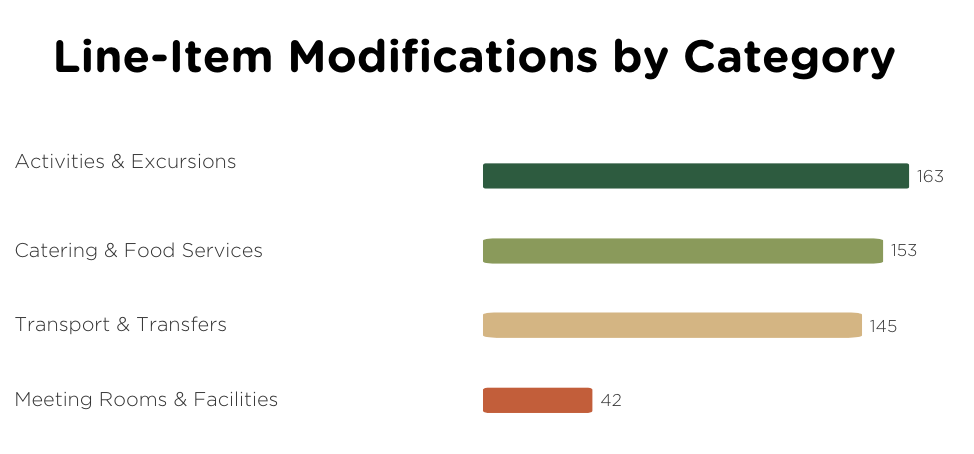
Where Budget Shifts Happen:

When budgets get squeezed, what is first to go? Looking at what clients actually decline shows some clear patterns:
With the right data, you can negotiate smarter and save money without making your team feel like they’re at a budget motel.
Resorts love to charge extra for weekends. Move your retreat to midweek (Monday–Thursday or Sunday–Wednesday) and watch the venue rates drop. It is usually what employees prefer anyway.
Solo airport transfers add up fast. Ask everyone to book flights in the same window, run three group shuttles, and you can cut transport costs in half.

Venues make a killing on AV rentals. Bundle your tech needs (projectors, screens, mics, Wi-Fi) before you sign the contract, when you’ve got the most leverage.
Open bars are a real financial gamble. Timed, flat-rate drink packages agreed with the venue before the party starts are much safer. Drunken nights and hangover mornings shouldn’t really be the vibe anyway.
Run through this checklist before you sign anything, so there are no surprises when the bill arrives:

Balancing Experience with Financial Control
Pulling off a great retreat means balancing unforgettable moments with a budget that doesn’t give you nightmares.
Hopefully, this piece gives you a better understanding of where the money goes, so you can watch out for sneaky extras like catering and transport, and lock in package deals early. That’s how you get an offsite everyone remembers, for the right reasons. And if you want help to stay on budget with your next when, you know where to find us.
From practical insider warnings to new secret locations, get our monthly, genuinely spam-free newsletter.
Subscribe now



The Architecture of Psychological Safety: Why Workplace Mental Health Needs a Physical Reset
Read more


