Home
>
Blog
>
Trends and insights
>
The Architecture of Psychological Safety: Why Workplace Mental Health Needs a Physical Reset
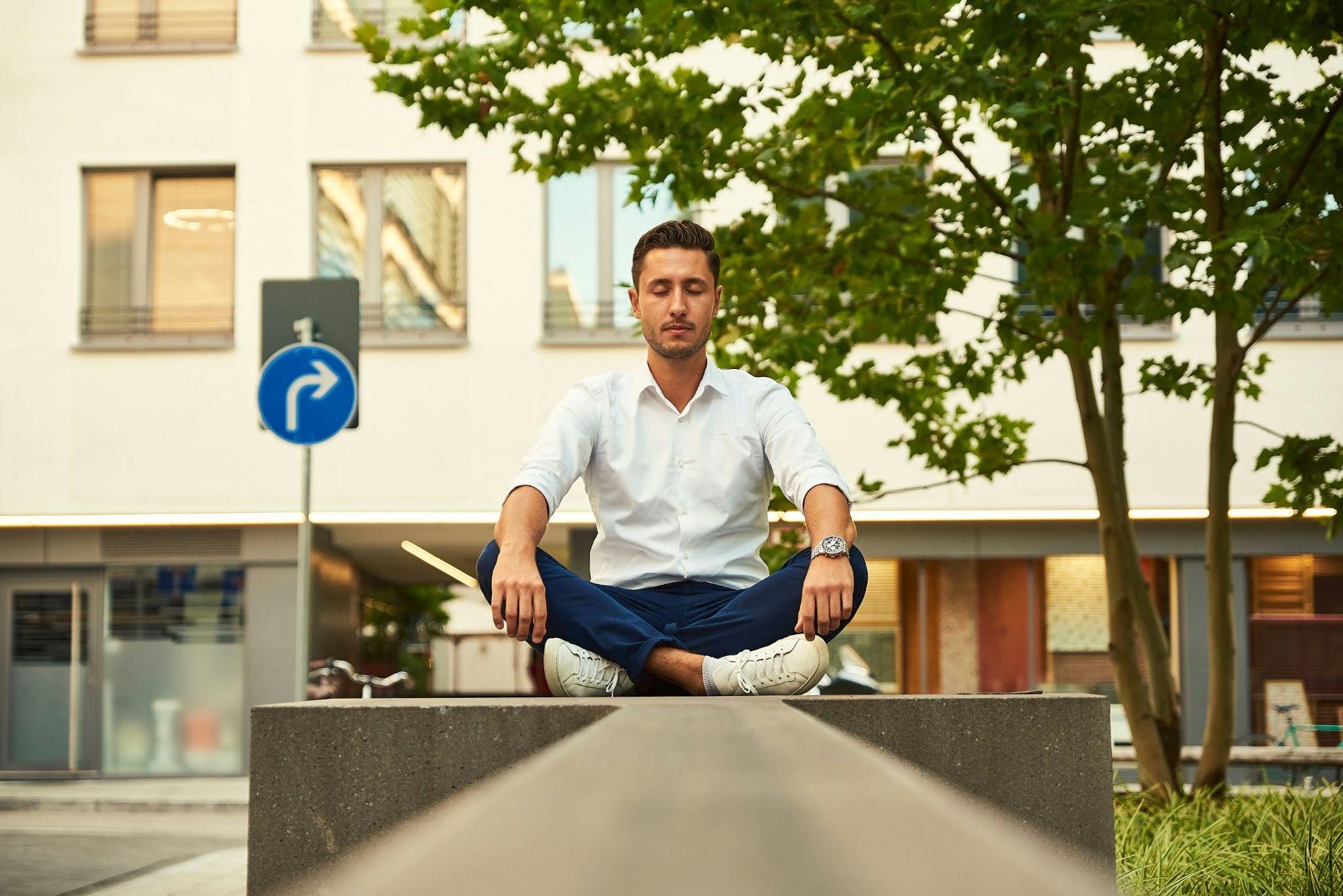
Every October, like clockwork, the corporate world goes through its annual World Mental Health Month routine.
The LinkedIn feed is filled with well-designed infographics on work-life balance. HR teams email all employees to announce a free three-month trial of a meditation app. A webinar on "Building Personal Resilience" is added to everybody's calendar, ironically, during the only time of day that people have designated for taking a break from their screens.
We all have good intentions, but let's be honest, a lot of this is just performative noise.
At Campfire, we mostly focus on team retreats from a performance perspective. We discuss breaking down organizational silos, refining the Q4 strategy, promoting alignment, and increasing productivity. All of these things are genuine and important. Yet when we view offsites solely in terms of business return on investment, we tend to ignore the most basic truth about the workplace from a human perspective: that your team’s mental health can't be built through an HR benefits package; it develops in the daily operational environment you create for them.
Work isn't a separate, isolated part of our lives that we put aside at 5:00 PM (if we are lucky); we spend about 90,000 hours working. If those hours are marked by continuous digital friction, silent pressure, and isolation, then the stress affects all other areas of our lives. People shouldn't have to spend five days each week just getting through until Saturday to feel human again.
It's now time this month to go beyond the wellness benefits and examine what actually has a detrimental and restorative effect on the human nervous system in a work setting.
If you wish to understand the reason why workplace burnout is at an all-time high even though there has been record spending on "employee wellness", then you need to consider the difference between systemic health and individual band-aids.
By providing employees with a meditation app or giving them a day off on Friday once a month when there is widespread team exhaustion, a company is effectively saying that the issue isn't the way we work but rather your inability to cope with the way we work.
This 'Perk Illusion' treats burnout as a failure of individual resilience rather than as a failure of the organisation's culture.
Although conventional HR methods concentrate on offering free meditation app codes, conducting stress webinars, giving gift card benefits, and having wellness sessions on Friday afternoons, the actual situation in the workplace consists of vague expectations regarding responses, exhaustion from back-to-back Zoom meetings, ambiguity in asynchronous communication, and rules that are high in anxiety and low in trust.
The data supports this. The Gallup State of the Global Workplace report repeatedly indicates that as much as 70% of team engagement and stress levels are directly the result of the quality of managers and the daily work dynamics, not because of policies regarding paid time off, company-provided gym memberships, or wellness benefits. An employee can't just use a mindfulness app to escape a work environment based on constant pings, continually changing goals, and low psychological safety.
Every September and October, our team at Campfire gets intake calls from founders and VPs of People that sound almost identical:
"Our team is hitting all their targets, but everyone feels like a stretched rubber band. We tried giving them care packages and extra days off, but people are still logging off exhausted and disconnected. We don't know what we're doing wrong."
What they are going through is a shortage of connection. If remote or hybrid teams don't have genuine human interactions and a sense of psychological safety, then introducing another digital tool or a wellness benefit won't reduce their stress, it will only add another notification to their screen. You can't correct a fundamental absence of human connection by offering a single individual perk.
If you regard treating workplace mental health as an operational system as merely soft, well-meaning management talk, then look carefully at what is taking place throughout the European Union.
The regulatory situation is changing rapidly. European legislators are taking steps to transform mental health from a voluntary HR benefit into a legally binding safety requirement. The Employment and Social Affairs (EMPL) Committee of the European Parliament has been leading an initiative with key figures such as MEP Estelle Ceulemans at the forefront, aiming to get the European Commission to produce a binding EU-wide directive on psychosocial risks at work (for more information about the initiatives of the European Parliament's EMPL Committee).
So what does this mean for employers? It means that the law is now giving the same legal importance to psychological hazards, for example, constant digital surveillance, unrealistic workloads, expectations regarding communication late at night, and toxic ambiguity, as it does to exposed electrical wiring or a broken handrail in a factory.
The old model treated mental health as a benefit offered by human resources, expected employees to cope on their own, and addressed burnout only after it occurred; the new EU regulation would treat psychosocial hazards as legal issues concerning workplace safety, impose liability on employers, and require structural risk assessments.
The figures relating to the economy and this legislation are clear: every year work-related depression and psychosocial strain result in losses to the European economy amounting to over €100 billion through reduced productivity, sick leave, and increased healthcare costs, a finding that has been pointed out in joint studies carried out by the World Health Organization and the International Labour Organization.
Governments are intervening since the social and economic costs of having teams that are dysfunctional and worn out are too great to rely on corporate goodwill alone. The point being made to managers is straightforward: managing the psychological atmosphere of your team is no longer a "nice-to-have" kind of cultural initiative; it is instead a fundamental duty of care in terms of operations.

Modern work has a normalized misery that should terrify any business leader: the culture of "living for the weekend."
When a team works in survival mode, fearing the 'Sunday Scaries' and constantly counting down the hours until Friday night, innovation stops. People in survival mode don't think creatively, won't take smart risks, and won't collaborate openly. They merely carry out the least amount of work necessary in order to keep their heads down and save their energy.
Burnout is usually not the result of a single, highly stressful project; instead, people show great resilience when putting in hard work on something meaningful and working with those they trust.
Instead, burnout is caused by the slow, relentless accumulation of digital micro-frictions:
In both remote and hybrid settings, written text tends to increase ambiguity. Because body language, tone of voice, and shared physical experience are missing, our brains automatically fill in the gaps by favoring negative interpretations.
We had a client, a rapidly growing tech team, in which a senior manager and an outstanding junior designer were in silent conflict for four months. The designer believed that the manager disliked her work since his replies on Slack were short and direct. She would spend hours going over each message and was always in a state of low-grade anxiety.
On the first day of their Campfire retreat, while on a spontaneous 10-minute walk through the woods to get their morning coffee, they had their first conversation without a screen between them. Within two minutes the designer realised that the manager was neither angry nor critical, merely busy juggling three projects and typing quickly on his phone.
The anxiety, defensive behaviour, and mental exhaustion that had built up over four months all disappeared in just ten minutes of actual contact with a real person.
This brings us to what a team retreat actually is, or at least, what it should be.
For years, companies have justified retreat budgets by pointing to business outputs: We’re going to map out the product roadmap, realign sales targets, and run three strategy workshops.
While those outcomes do happen, focusing purely on business output misses the point. A team retreat is also there to regulate the nervous system and repair social bonds:
People are biologically programmed to engage in face-to-face interaction, interpreting eye contact, slight changes in body language, and the use of shared physical spaces in order to judge whether a situation is safe and to establish true trust. If you communicate solely with your teammates via pixels for an extended period of time, the biological social structure that keeps a team together will gradually break down.
The environment is of great importance. Studies concerning biophilia, our natural biological tendency to connect with outdoor, natural surroundings, demonstrate that being in such outdoor, natural environments can significantly reduce cortisol levels, lower blood pressure, and restore cognitive attention capacity within a short time.
When you take a team out of grey offices or isolated home bedrooms and put them into an open, nature-first environment, something physiological happens:
Sitting around an open fire outdoors at night isn't just a cozy “extra”. Around a fire, corporate hierarchy dissolves naturally. The CEO and an intern sit on the same wooden logs, looking at the same flames, sharing snacks, and talking about real life. You cannot replicate that depth of psychological safety on a Zoom call, no matter how many icebreaker games you play.

A quick warning: a retreat that is badly designed can quite easily achieve the very thing it was meant to avoid.
We've all attended awful corporate offsites: they cram 14 hours of compulsory PowerPoint presentations into three days, fill each evening with forced team-building events, and end with a mandatory late-night drinking session. When the employees get back to their offices on Monday morning, they are considerably more tired than when they left on Thursday.
The structure should match the aims of mental health, psychological safety, and human connection if those are indeed the objectives of the retreat.
1. Give “space” a higher priority than sticking to a schedule since it is in unscheduled time that genuine connection takes place. Don't feel the need to fill up every hour on the calendar. Instead, include large, unscheduled blocks of free time when people can go for a walk, read, think things through, or have spontaneous, unforced conversations with colleagues.
2. Abandon the endless slide presentations and the compulsory corporate icebreakers. Replace them with shared, down-to-earth physical activities such as hiking a trail, preparing a group meal outside, or sitting by a fire. These shared physical experiences foster natural camaraderie without feeling performative.
3. Keep people's energy and sense of autonomy. Don't push social events past the point where people are exhausted. Make evening social activities pleasant, warm, and optional. People who are introverted or neurodivergent need some quiet time to recharge their social energy without being judged or punished for doing so.
The best measure of a retreat isn't the way people feel on Friday night before leaving. It is what takes place on Tuesday morning three weeks later.
A retreat is not a temporary prison escape! People shouldn't spend just a brief weekend away before returning to their stressful, high-anxiety daily routine; the trust, clarity, and human connections developed during the offsite should become concrete, daily operational habits when everyone rejoins Slack.
While World Mental Health Month is underway, we must stop viewing employee wellbeing as something we only address when people are already burning out. We also need to stop pretending that simply providing a subscription to a meditation app is going to cure a culture based on continuous anxiety and digital isolation.
We spend far too many of our years at work in a situation where people are working under high stress and only wait until the weekend to feel like humans.
Letting your team get away from their screens, go into nature, look each other directly in the eye, and reestablish genuine human trust is not a luxury that corporations can afford or a benefit offered by human resources. It is fundamental stuff for building a company's culture.
In October, put this straightforward question to your leadership team: are we creating a workplace culture in which people can truly thrive from Monday to Friday, or are we instead setting up a culture in which they merely get by until Saturday?
From practical insider warnings to new secret locations, get our monthly, genuinely spam-free newsletter.
Subscribe now


%20(1).jpeg)


