
“Ask AI” is the new “just Google it”. But while Google is a useful tool, AI is increasingly encroaching on all aspects of our lives and even taking over an ever-growing number of our daily tasks. Although a majority of people appreciate the undeniable help AI can bring to our everyday lives, more and more people are concerned that we might be losing a little bit of our humanity at the altar of productivity.
But as artificial intelligence becomes smarter, many companies make a similar mistake: assuming that because AI can optimize a schedule, it can just as well optimize a team culture. This stems from a fundamental misunderstanding of what a “culture” actually is. Culture is not an output of efficiency; it is the product of the sum of all human interactions. When you automate the interaction, you reach 0. Leadership in 2026 is waking up to the reality that a perfectly optimized company on paper does not necessarily rhyme with a happy team.
So yes, we might be more efficient on paper screen, IRL, the data doesn't lie. Gallup reports show that 1 in 5 employees suffer from loneliness, and that is 1 in 4 for remote workers. It also teaches us that while remote workers might be more engaged, they are struggling with stress more than their colleagues in the office. Stress in the remote era is often a “quiet” stress. In an office, a difficult meeting is followed by a walk to the coffee machine and a brief, grounding chat with a peer. In the remote world of AI, that difficult meeting ends with a click, leaving the employee alone in a silent room with their cortisol levels spiking and no physical presence to help them de-escalate.
And no algorithm can fix that.

Ironically, you have to be online to be familiar with the acronym IRL (In Real Life). It is the way people refer to life off the screen when they type. And it seems like IRL is trending… on and offline.
We indeed see a trust crisis in online content, with a surge in the search for offline communities. The idea that most of the internet is now bots talking to bots doesn't sound like a conspiracy anymore, but very much like reality. When every LinkedIn post is “refined” by an LLM, and every image is polished by generative filters, our brains begin to crave the messiness of the physical world.
Indeed, research shows that only 42% trust social media for information, shifting how influencers and online businesses connect with their audiences toward smaller, more community-based events that focus on belonging.
And it looks like young millennials and Gen Z are leading the offensive. Beyond their excitement over flip phones and disposable cameras, there is a stronger message. Growing up in a world of infinite, frictionless scrolling has left these generations with a sensory deficit. They aren’t just buying vinyl records for the sound; they are buying them for the ritual, the physical act of placing a needle, or the inability to “skip” a track. As if they were purposefully seeking “obstruction” in a world that has become too smooth and too fast.
They are looking for more authenticity and analog experiences, which they see as beneficial to their overall wellbeing.
While it starts young with the new generations, the realization also comes to more and more people with age, according to another US survey finding that more than 77% of interviewees declared that “the older they grow, the more they realize the importance of spending time in the 'real world” as opposed to the online world.

As we have been spending more time online, we have somehow neglected physical spaces. But this IRL trend is also affecting how we use offline spaces. A large 2026 study by Mastercard mentions a “third spaces revival” born of the need for more connected “IRL” communities. And the rise of the demand for more spaces designed specifically for what sociologists call “Propinquity”, the physical proximity that leads to spontaneous relationship building. Companies are starting to respond by transforming underutilized conference rooms into pop-up collaboration lounges, hosting team lunches or after-work gatherings in local cafes, or partnering with coworking spaces that encourage casual encounters. Others are organizing rotating in-person 'culture days' in flexible community hubs, inviting employees to work together in inspiring environments that are intentionally set up for mingling and unplanned interactions. By actively creating these shared physical settings, organizations can spark the types of spontaneous connections and fresh ideas that simply can’t happen in a scheduled video call.
Tips
For smaller organizations or those with limited budgets, there are easy, scalable ways to create more human moments: host a regular in-person coffee hour at the office or a local park, set up a simple "gratitude wall" where teammates can leave notes for each other, or encourage walking meetings outside. These low-cost ideas help bring teams together with minimal resources, making the IRL trend accessible to anyone.
In 2026, the event platform Eventbrite recently released their Social Study “Rest to Real”which “captures a cultural shift back to live experiences that feel human, unfiltered and alive”.
Proving again that “micro-moments”, the awkward silence before a talk starts, the accidental bump in the hallway, are actually the most valued parts of an event. AI can simulate a keynote speech, but it cannot simulate a “serendipitous encounter.
Looking at trends based on the events listed on their platform, they can see interesting patterns emerge that confirm the need for more meaningful offline connections.
When it comes to the type of events, the demand is for more unique and authentic, “real-life” events in exciting venues, with a dose of spontaneity as well.
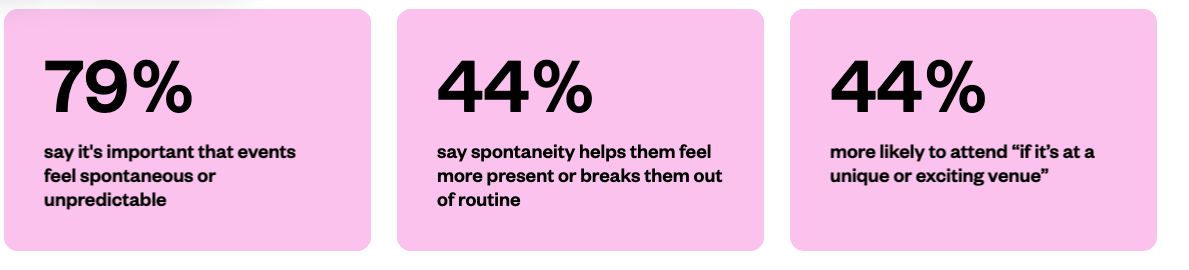
In addition, we see that people actively seek out more community-based events as well as ones that allow them to participate rather than simply “consume”.


Don’t get fooled. This trend isn't just a fleeting preference for pottery classes or music festivals; it is a collective defense mechanism. We are gravitating toward these high-touch experiences because our high-tech lifestyles have reached a breaking point.
Reclaim Real Connection: Step away from the algorithm and rediscover the power of authentic, in-person moments. Join the IRL Renaissance and build trust, creativity, and belonging in your team, starting today.

At 7 am, you reach for your phone, which has replaced the alarm clock.
At 8 am, an app recommends the healthiest breakfast for you.
At 9 am, your practically self-driving car takes you to work, where many of your tasks are delegated to AI. You find yourself scrolling on social media, not too sure if what you are seeing is real or true. At the end of your day, you find yourself on your couch half watching a series Netflix’s algorithm suggested to you “based on your previous choices” and half on your phone, sending reels to your friends.
While this may sound bleak, many people will probably find this “average” day familiar. The loneliness epidemic, the loss of trust in media, the AI anxiety… it is all slowly making us fear that we are slowly losing our humanity. And that impacts all aspects of our lives, personal and professional.

There is no denying that AI and tech in general are great tools that support progress, growth, and innovation (when used appropriately; that is not the discussion of this deep dive). But when it all comes at the cost of the people, that is where the problem lies. Efficiency can become toxic when the tools designed to save us time actually end up stealing our capacity for deep thinking, creativity, and innovation, leaving us too preoccupied by the next task to automate or the next notification.
Leaders today have to be intentional about balancing efficiency with the wellbeing of their teams. Simple but powerful strategies can help: setting clear 'no-notification' hours so employees can focus or unplug completely, encouraging regular deep work blocks where instant replies aren't expected, and making it acceptable to block off time in calendars for creativity or thinking rather than constant output. Some managers are even redesigning meeting schedules to allow longer breaks or 'focus Fridays' with no meetings at all. By proactively creating these boundaries, leaders empower their teams to take ownership of their attention and health, while ensuring the long-term success of both their people and the organization.
A clear sign of overoptimization is when managers start to be more concerned with “is every second accounted for?” rather than "Is the team healthy and delivering?"
Productivity for the sake of productivity is like putting a stronger engine on a pickup truck and watching what matters fall off as you speed: trust, creativity, and psychological safety. And before you know it, your best drivers are going to get off.
Indeed, psychological safety tends to be the first thing to evaporate in a hyper-automated environment. Why? Because it requires eye contact, body language, and shared laughter (the actual sound of laughter, not the 😆 emojis). Signals that are filtered out by video compression and AI summaries.

A very telling sign that AI is not necessarily fixing all of our problems is that the burnout rate is still rising. According to Grow Therapy and Forbes, 66% of US employees experienced active burnout in 2025, a record high.
Despite the promises of delegating all the boring, repetitive, time-consuming tasks to “the robots,” we are still more exhausted than ever.
Yes, productivity has increased, but the Jevons paradox came into play: the time we saved thanks to automation has immediately been reallocated to new tasks. We are working faster but not necessarily better.
Plus, AI allows us to handle 10x the volume of communication, which means our brains are being forced to process a volume of “human” interaction that we are not evolved for. At the risk of repeating ourselves, we were built for tribes of 150 people, while AI is forcing us to manage digital tribes of 15,000!
We have all seen it, and we have probably all done it, even to get AI to write our email or polish our paper.
But while it is improving, many of us still recognize the sterile, overcurated vibe of LLMs.
Human inputs and, yes, at times typos and messiness, are being removed from email interactions, meeting notes, website copy, and even blog posts.
And while it might for sure reduce human mistakes, it also removes human warmth, empathy, and creativity that make a culture so rich.
In time, the use of AI tools transforms online communication into a more uniform, predictable, and "average" experience. As algorithms are trained to push the content most people are likely to like, everyone is now following the same template, chasing likes, SEO ranking, and virality. It is getting harder to discover “subculture” or niche content.
That works for what we look at on social media as well as what we write. The “most probable” word predicted by AI when you type makes all of our content less genuine and more formatted and generic.
In addition, let’s not forget AI models are created and trained on specific “human experiences”, usually Western males, probably highly educated. Narrowing the culture even more.
Lead the Change: Don’t let your culture get flattened by automation. Champion human-centered leadership and create spaces where every voice is heard, and every team member feels connected, online and off.
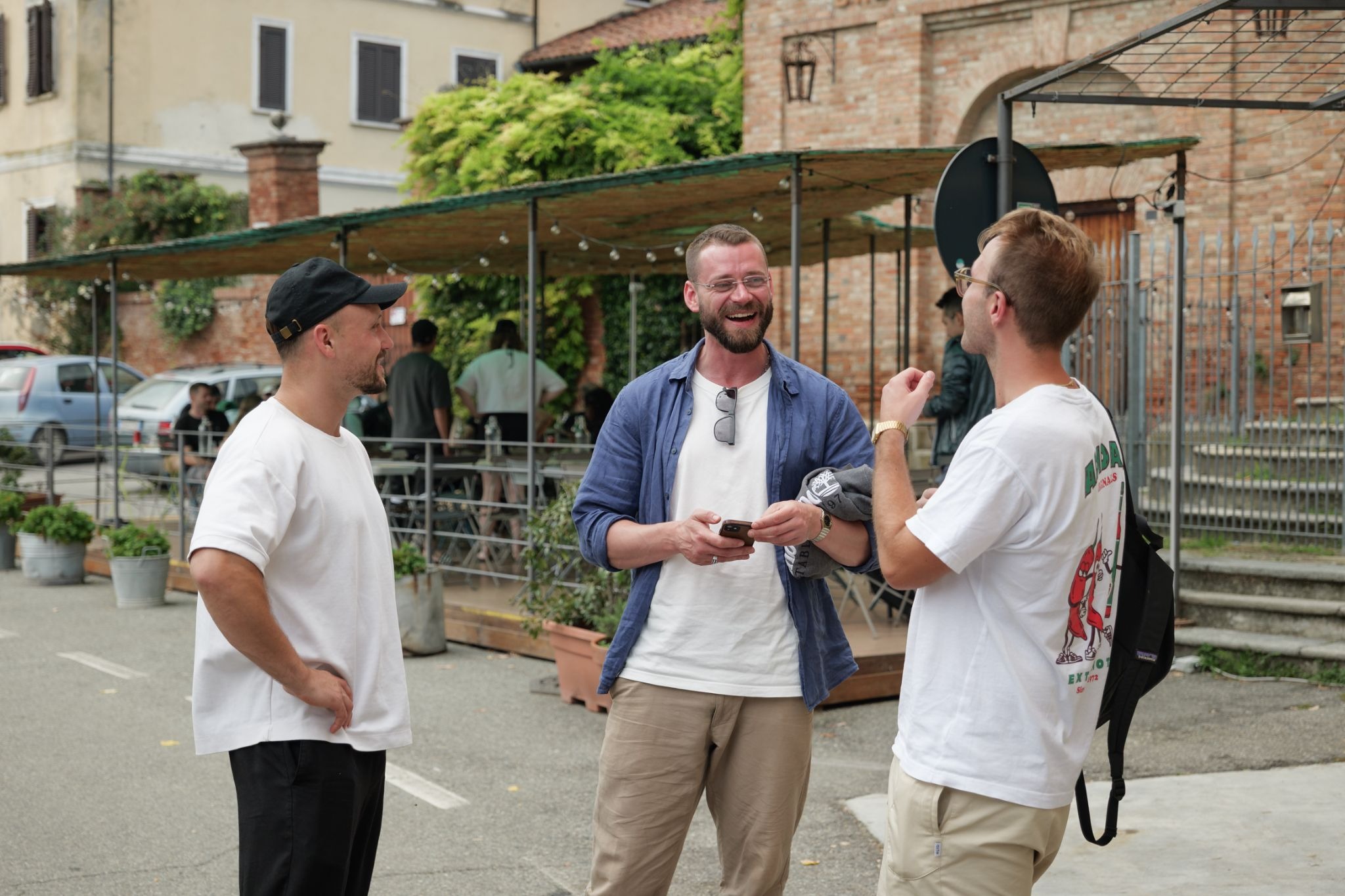
To understand the “IRL Renaissance,” we must look at the “Loneliness Economy.” Loneliness is a personal tragedy and a high societal cost that companies experience firsthand: when employees feel disconnected, they stop going the extra mile.
Because we are feeling lonely and disconnected from our teams and jobs, because we fail to see why we do what we do, we tend to “silent quit”, take a sick leave, or once and for all quit our jobs, which all translates into a lot of direct and indirect costs for the companies.
A research paper showed that “on average, lonely employees miss 5.7 more days of work than non-lonely employees, and this avoidable absenteeism is estimated to cost U.S. employers $154 billion annually (Bowers et al., 2022). “ In the UK, the estimation is around £2.5 billion.
Furthermore, it is getting harder for companies to retain talent when the invisible bonds that keep people together during hard times aren't nurtured by late pizza night, shared coffee breaks, or simply working together on something in the same space. It is easier for employees to “jump” to the next position that offers a better salary if they do not feel deeply connected to their team.
As digital connection becomes “cheap and infinite,” physical presence becomes rare, expensive, and premium. To be “Offline” might well become the ultimate status symbol.
There is a real urgency to bring back the way we come together.
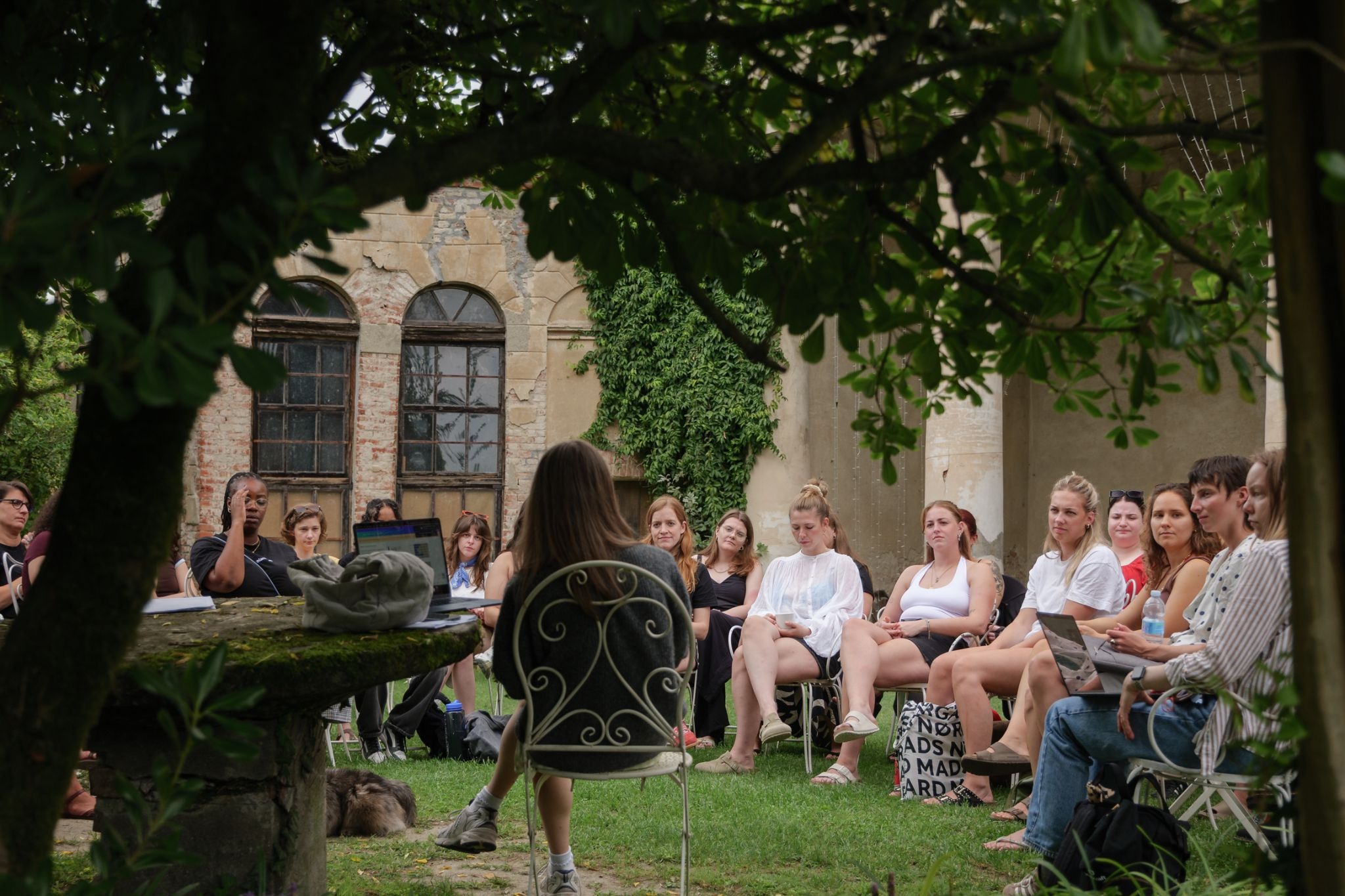
To invest in authenticity, we must first invest in the environment that allows it to flourish. This is where the strategic retreat, specifically those centered around nature and intentional "unplugging," shifts from an HR perk to a survival strategy for the modern enterprise. At the same time, it is vital to ensure that retreats and in-person experiences are accessible and inclusive for all team members. This means designing retreats and gatherings that accommodate remote, international, neurodiverse, and differently-abled employees, whether by considering location and facilities, offering hybrid participation options, or proactively addressing dietary, mobility, and language needs. Only by making these experiences accessible to everyone can organizations truly foster belonging and authenticity across their teams.
For leaders ready to champion this change, a few proven retreat design principles help maximize results:
When thoughtfully designed, these retreats offer teams not just a break, but a foundation for a more authentic and resilient culture back in the flow of everyday work.

The "IRL Renaissance" is leading us back to a concept popularized by Edward O. Wilson: Biophilia. It suggests that humans have an innate tendency to connect with nature and other forms of life. In a world of cold glass screens and haptic vibrations, nature provides what psychologists call "Soft Fascination."
When we are staring at a Zoom screen, we are using "Directed Attention," which is exhausting and finite. It’s why we feel "fried" by 4 pm. Nature, however, offers a sensory landscape that requires no forced focus. The fractal patterns in trees, the rhythm of moving water, and the vastness of a horizon act as a neurological balm.
For a team, this is the ultimate de-escalator. You cannot build a culture of trust when everyone is in a state of "High Beta" brainwave activity (the stress-induced state of constant alertness). By moving a team into a natural setting, you are effectively lowering the collective cortisol of the organization. You are moving them from "Survival Mode" to "Connection Mode."
In the corporate world, we have become obsessed with "structured networking", the awkward breakout room, or the forced icebreaker. But authenticity cannot be forced; it must be seduced.
The most successful retreats in 2026 are moving away from "workshops" and toward Serendipitous moments. " This is the unstructured time between the activities. It’s the hike where two developers talk about their shared love of 90s cinema. It’s the evening around a fire where a CEO admits a vulnerability.
These "micro-interactions" are the glue of the IRL Renaissance. You cannot schedule a "serendipitous breakthrough" in a Microsoft Teams calendar invite. You have to create the physical conditions for it to happen. When you remove the "ping" of the notification, you create a vacuum that is naturally filled by human curiosity.

The reason Gen Z is buying vinyl and disposable cameras is the same reason modern teams need physical rituals. Digital work is ephemeral; it leaves no trace on the physical world. You finish a project, and it’s just a file in the cloud.
Retreats introduce Ritual. Whether it’s a shared morning walk, a communal cooking experience, or a tech-free "circle," these rituals create a shared history that an algorithm cannot replicate. In a remote-first world, these physical anchors become the "north star" for the team’s culture for the rest of the year.
"We found that teams who spent 72 hours together in a natural setting, without devices, reported a 40% increase in perceived psychological safety that lasted for six months after the event." — Hypothetical 2026 Workplace Study.
The hardest pill for many managers to swallow is that the most productive part of a retreat is often the "white space."
In the 19th century, the Industrial Revolution commodified our bodies. In the 21st century, the AI Revolution is commodifying our attention. To reclaim authenticity, we must reclaim the right to be "unproductive" together. When a team goes on a retreat, they aren't just "taking a break." They are:

We are seeing a shift in how companies allocate their real estate budgets. They are downsizing the permanent, sterile office in the city center and reinvesting that capital into "Culture Hubs" or recurring retreats. For example, Salesforce has introduced its Trailblazer Ranch in California, a retreat center designed for employee connection and cultural deep dives outside of standard offices. Similarly, Dropbox has adopted the "Studio" model, closing most of its traditional offices and creating collaborative hubs specifically aimed at fostering creativity, connection, and community when teams do gather in person. These company experiments make clear that the 'Culture Hub' concept is not just theoretical, but increasingly a proven approach for the future of work.
The logic is simple: If the work can be done anywhere, then the "where" should be somewhere that makes us more human.
We are moving away from the "Office as a Factory" toward the "Retreat as a Temple." A place where we go to remember who we are, why we are working together, and what the "real world" actually feels like under our feet.
As we look toward the latter half of the decade, the companies that will survive the "Algorithm Fatigue" are those that recognize a simple truth: You can’t build a legacy on a 5G connection alone. You need soil, sunset, and the physical presence of other humans.

For HR leaders, this means taking a proactive approach: regularly review which aspects of your team's experience have been automated or digitized, and look for opportunities to reintroduce intentional human connection points. Prioritize in-person interactions where possible, protect time for genuine conversations, and design your workflows to safeguard the small rituals and spontaneous exchanges that build trust. By putting human connection at the heart of your people strategy, you help ensure that efficiency supports culture, rather than replacing it.
It is not about ditching technology and AI altogether but about imagining and building a world where tech, wellbeing, community, and sustainability converge and work together to shape a better future.
AI will continue to handle the "what" and "how." Leadership must now double down on the "who." To meet this challenge, leaders themselves need to evolve not just in mindset but in actionable skills. Leadership development must focus on cultivating empathy to deeply understand team members, practicing active listening to create space for honest dialogue, and strengthening facilitation skills to bring out the best in group settings.
To help HR professionals build these crucial capabilities, organizations can implement concrete development activities such as empathy workshops, where leaders practice perspective-taking and learn to interpret emotional cues in real-world scenarios. Another effective format is peer coaching circles, in which managers regularly support one another with real-time feedback, role-play, and collaborative problem-solving on real leadership challenges. These sessions help leaders strengthen self-awareness and sharpen their listening and facilitation skills. By investing in these hands-on practices, teams can embed human-centric leadership in their culture for the long term.
The coming decades will reward leaders who can read the room beyond the screens, who check in with genuine curiosity, and who foster trust and belonging. Building these human-centric skills is essential for any manager who wants to harness the full power of their team's creativity, resilience, and potential.
The most successful 2026 companies aren't the ones with the best AI, but the ones who know how to gather their people around a common "fire."
From practical insider warnings to new secret locations, get our monthly, genuinely spam-free newsletter.
Subscribe now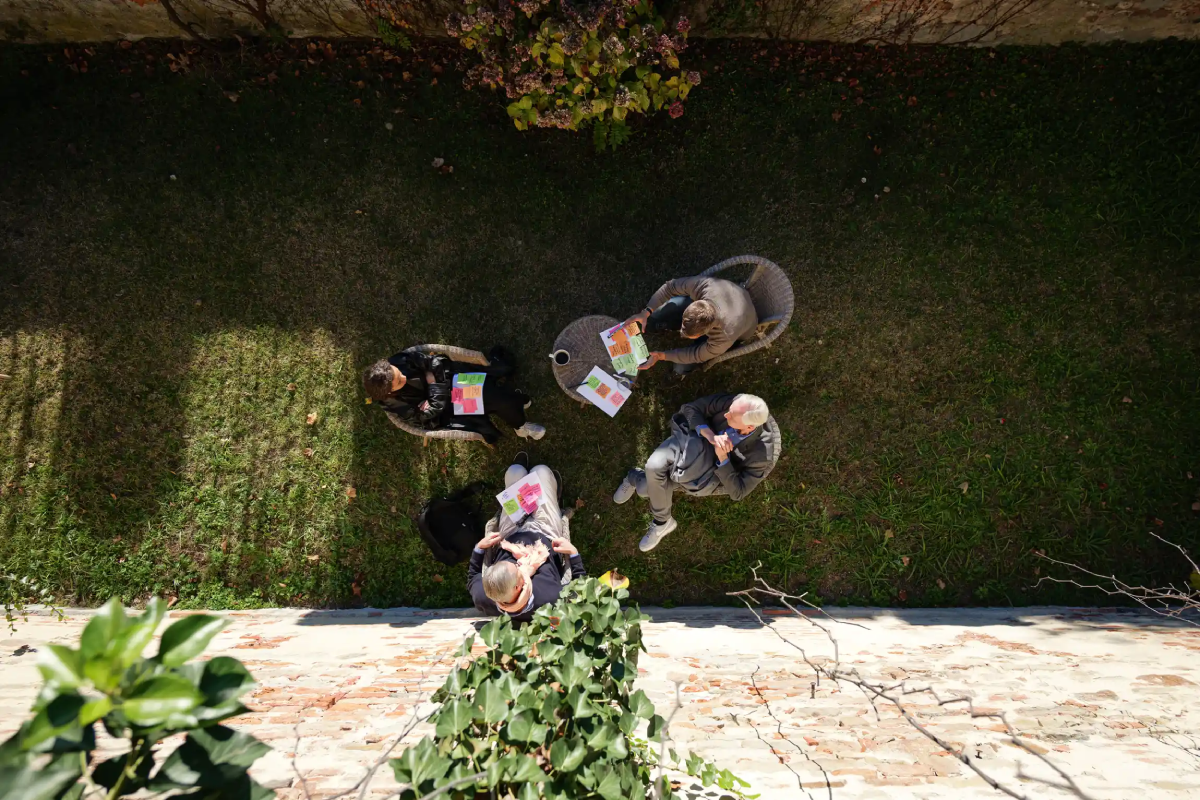


%20(1).jpeg)


