Home
>
Blog
>
Trends and insights
>
Employee Turnover in Modern Organizations: Analysis, Trends, and Strategic Solutions

Employee turnover refers to the rate at which employees leave an organization within a specified period. It's a natural process, but whether it originates from the employer or the employee, it always impacts the company, and the business can suffer the consequences when leadership fails to handle it adequately.
In this article, we aim to analyze the various causes of turnover, its measurement, and the financial impact it can have, as well as some strategic responses to mitigate turnover.
We refer to turnover as the departure of an employee from a company. We distinguish between involuntary and voluntary turnover.
Involuntary turnover is a decision made by the employer and imposed on the employee. The reasons can be poor performances, misconduct, restructuring, or budget cuts. While they are at times necessary, they can hurt even those who stay, and should be addressed with empathy and a support system in place.
When an employee decides to move on to their next adventure, we refer to this as voluntary turnover. It can be for positive reasons, such as an entrepreneurial experience, returning to school, or simply retiring. But it can also signal dissatisfaction when people move on to other jobs. Perhaps there is a lack of career opportunities, issues with management, a toxic work environment, or low wages... When a company experiences high volumes of voluntary turnover, it is a warning sign that needs attention.
High rates of turnover, whether voluntary or involuntary, offer valuable insights into the health of a company and its culture.

High turnover presents several significant business challenges that impact both operational and financial performance, as well as other key aspects.
When a company loses someone, regardless of whose decision it is, there are added costs.
According to Gallup's report, employee turnover can cost from one-half to twice the employee's annual salary, depending on their seniority.
Gallup estimates that replacing leaders and managers costs around 200% of their salary, professionals in technical roles cost 80% of their salary, and frontline employees cost 40% of their salary.
To calculate your turnover cost, sum all direct and indirect expenses associated with a departure and replacement. That would include potential severance expenses, advertising costs, interview and manager's time, onboarding, and training. That is without even considering productivity loss.
Turnover disrupts workflow and established team dynamics, especially when skilled or key employees leave. The new hires will require time to acclimatize and develop the knowledge and relationships necessary to be fully productive. During this adjustment period, which can last from six months to a year on average according to Gallup, innovation, quality, and output may all suffer. A study shows that turnover has a direct impact on product reliability in the manufacturing sector. And all of that, of course, influences the team morale.
Frequent departures can hurt morale among the remaining staff, leading to overwork, increased stress, and a decline in trust in management.
In turn, this environment can lead to declining engagement and increased turnover, creating a vicious cycle that may further impact performance and overall well-being. Indeed, studies show that turnover is contagious. When someone resigns, there is a 9.1% higher chance that someone else on the same team will resign within 135 days than an employee on another team. In addition, the research found that the smaller the team, the higher the contagion!
High turnover can also harm a business’s reputation and erode its employer brand, making it more challenging to attract and retain top talent. Clients and customers may notice frequent staff changes, which can erode confidence in the organization and negatively impact long-term relationships, particularly in customer-facing roles. In the case of talent acquisition, high turnover gives the impression that there are cultural issues and that the company is not a good place to work.

Losing experienced employees means losing valuable institutional knowledge, skills, and the networks they have built over time. This loss can decrease a company’s competitive edge and make growth more difficult.
Research has shown that 40% of tacit knowledge, defined as the implicit, experience-based knowledge ingrained in individuals, is usually lost within six months after the employee leaves, especially in high-innovation sectors. As a consequence, companies with a high loss of tacit knowledge experienced a 25% decline in the implementation of new ideas.
Unfortunately, many companies still rely on informal methods such as inconsistent on-the-job training. A survey by Gartner (2023) found that only 32% of organizations have measurable knowledge transfer programs, while 68% acknowledged that critical knowledge was “buried” with departing employees.
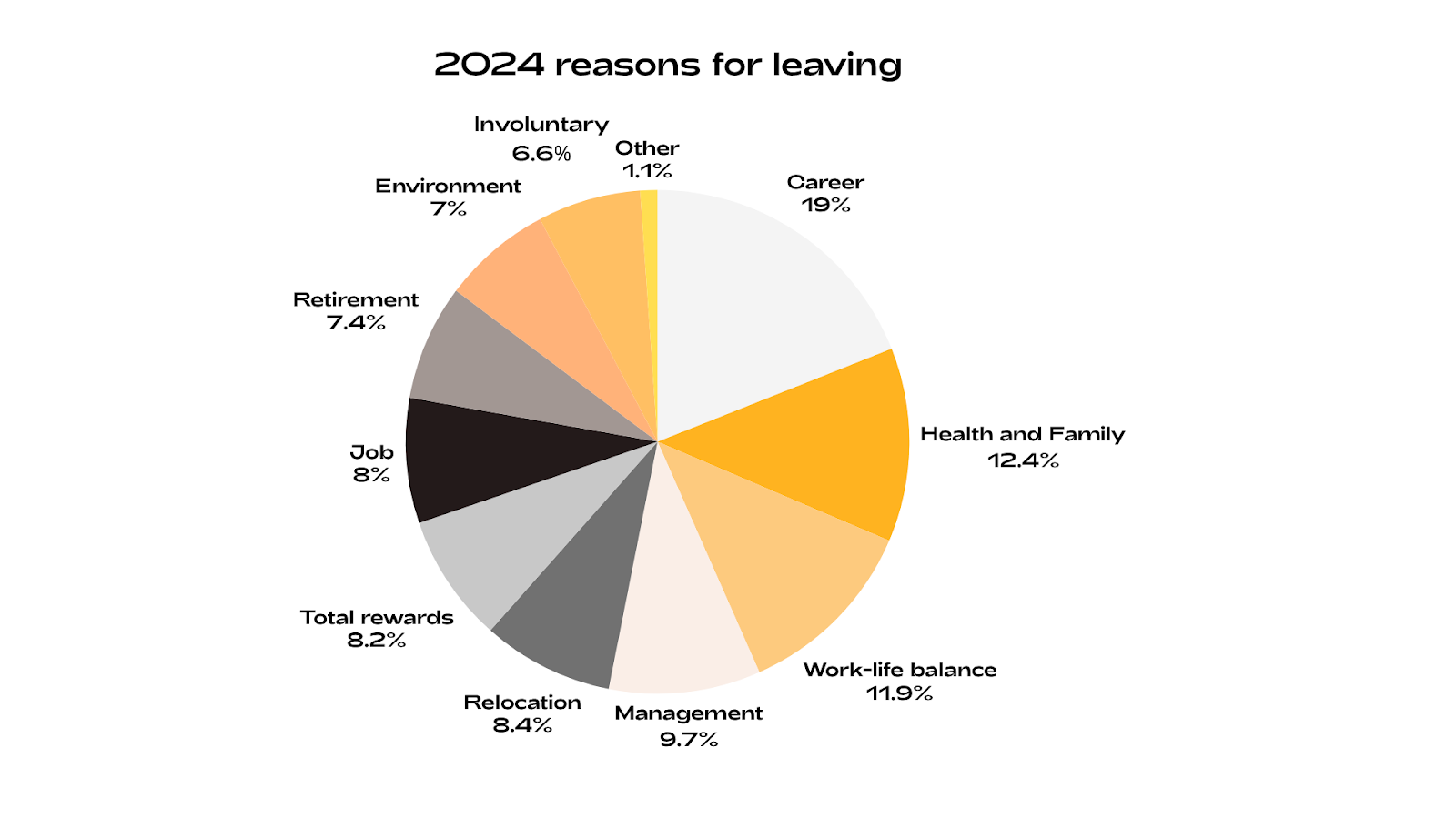
The Work Institute report on Employee Retention lists the 2024 causes of employee turnover:
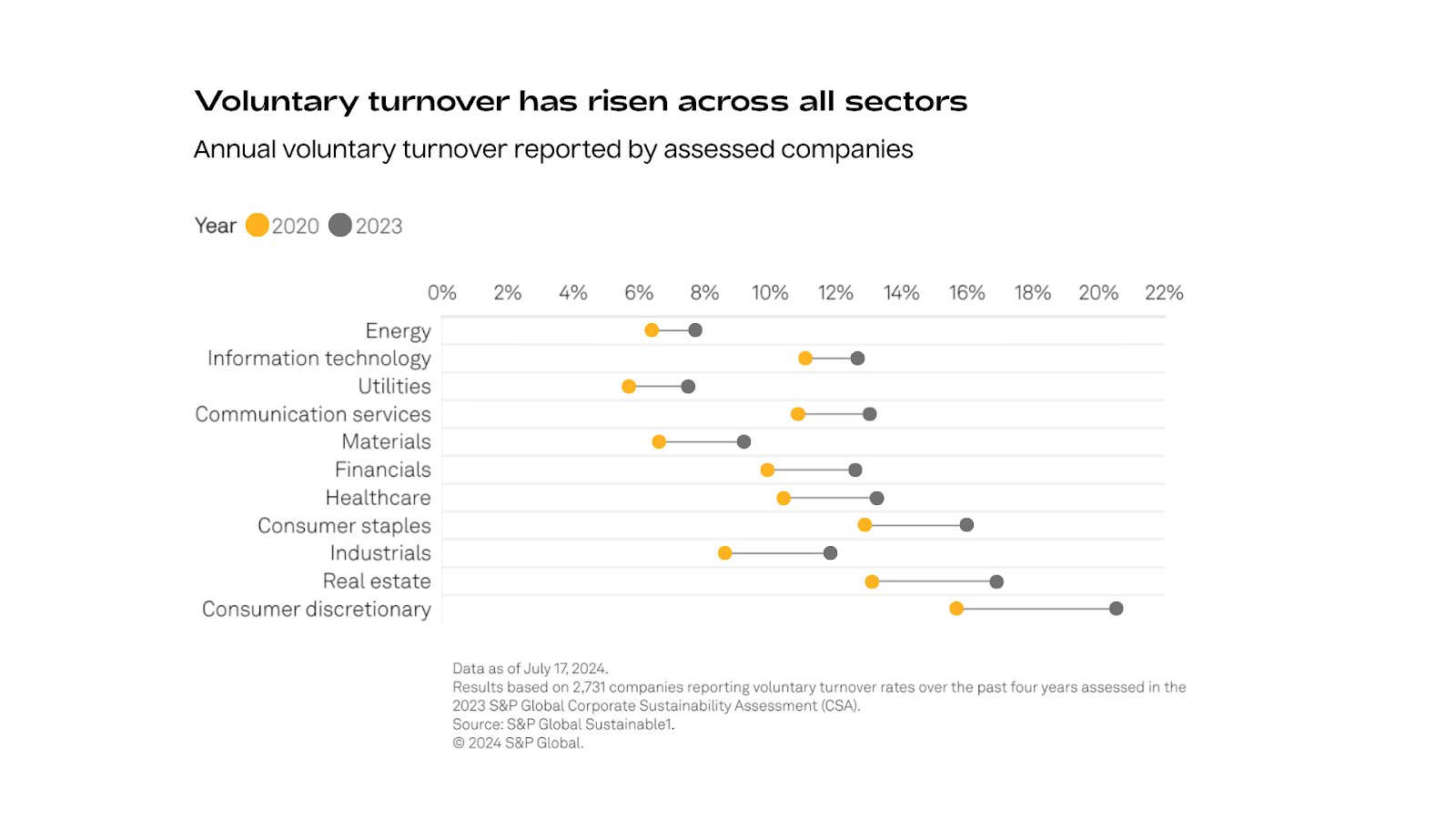
According to S&P Global data from 2024, a financial information and analytics company, voluntary turnover has increased in recent years across all industries.
With the most significant increase in the consumer discretionary sector. (goods and services that consumers consider non-essential but desirable, such as holidays, restaurants, or a new car).
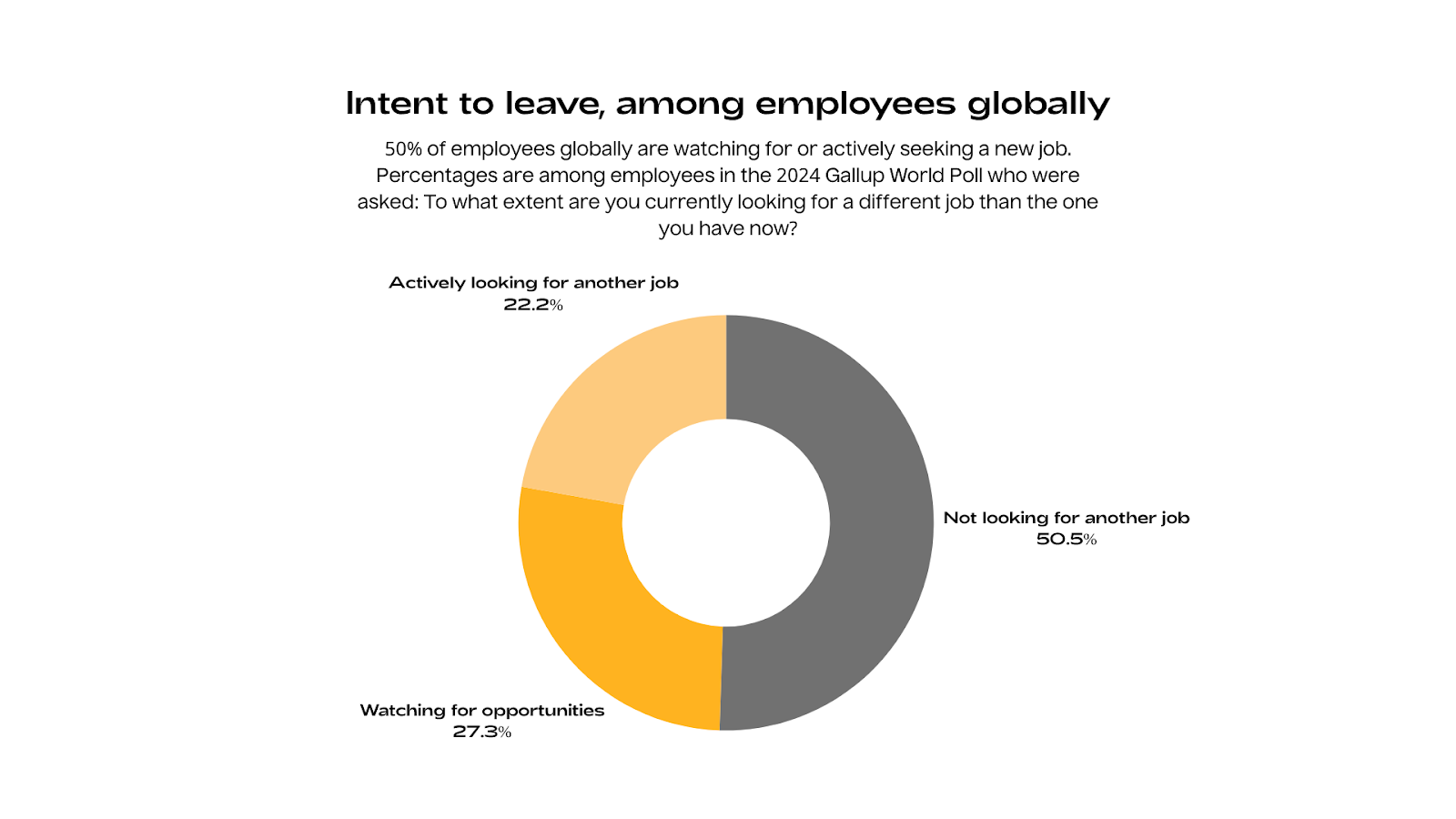
According to Gallup’s Employee Retention & Attraction Global Indicators, 50% of employees are either keeping an eye out for better professional opportunities or actively looking for another position.
It seems like the majority of people who volunteer to leave do it somehow “impulsively”. According to Gallup, 77% of them do it within three months of starting to look for a new position, or are not even actively looking at all.
In addition, newer generations entering the workforce, such as Gen Z, appear to be changing jobs more frequently than their predecessors. According to a 2023 survey conducted by ResumeLab on the US market, 83% of Gen Z consider themselves “job hoppers,” but still typically commit between two and five years to a position.
When examining the primary reasons for volunteer turnover, we can identify many that could be easily preventable. Unfortunately, many companies still fail to see the big picture.
It is first essential to understand the root cause and not do a quick fix. Also, take a holistic approach to all the reasons for leaving, such as career growth, work-life balance, or even health, which are correlated and impact one another.
The priority is understanding, which is achieved by gathering data through surveys, feedback, and exit interviews.
Then, act on that feedback proactively.
Based on recent data and what we saw earlier in this piece, some key retention strategies for preventable turnover are:

While some level of voluntary turnover is standard in every company, when many people decide to leave, it reveals a great deal more about the business itself than about the individual employees. Like any other relationship, when people feel ignored, undervalued, disrespected, or stuck, they often move on in the hope of finding something better. To avoid losing talent, companies must now consider the overall culture and how the environment they create for their team affects the employees' well-being and mental health, in addition to wages and benefits.
From practical insider warnings to new secret locations, get our monthly, genuinely spam-free newsletter.
Subscribe now