Discover actionable insights on fostering a workplace culture that inspires and engages—trusted by over 24,000 subscribers worldwide.
Thank you! Your submission has been received!
Oops! Something went wrong while submitting the form.
“You step off the bus, stretch, and hear: ‘Let’s start by sharing our most awkward professional moment!’ Cue internal groans. True story.
Most icebreakers fail because they aim for vulnerability before safety.
An icebreaker should be short, engaging, and build rapport without pressure, create a safe space, be fun, and teach something about the other participants. It should NOT be stress-inducing, long, deeply personal, or involving much physical touch. It’s pretty simple and yet, so many ice breakers fall flat, at best, and trigger people in the worst case scenario.
In this piece, we explore the essential principles of a good icebreaker that gets the work done. The best icebreakers are voluntary, inclusive, aligned with retreat goals, and well‑framed.
What makes an icebreaker actually work (or not)
It is all in the name: icebreakers are meant to break the ice at the start of a meeting, gathering, or event that brings together people who don't usually know each other well or at all and who will be working together for a period of time. The idea is to help people get comfortable with each other more quickly, making collaboration easier.
We spoke with Elana Shyong, a Community builder and trained facilitator, who shared some critical thoughts and a couple of her favorite icebreakers.
A few important things to keep in mind are that icebreakers should be:
Voluntary - You should never force attendees to do something they don't want to.
Low risk/inclusive: it should be a simple action, question, or activity accessible to all participants.
aligned with the retreat goal(s)
Why framing and setup matter
A well‑designed icebreaker can still fall flat if people feel surprised, put on the spot, or unclear about why they are doing it. Framing the activity with a simple “why this, why now” reduces resistance and helps people feel respected rather than managed. When leaders explain how the exercise links to retreat goals (e.g., cross‑team connection before strategy work), participants are more likely to lean in and share.
Once you’ve set the right tone, it’s time to match the activity to the moment.
Matching icebreakers to context
Different moments call for varying levels of energy and vulnerability. A light, fast game works well at the very start of a retreat, while more reflective activities fit better once some trust is established. Group size, cultural mix, and physical space also affect what will work: a high‑movement game might be perfect outdoors but exclusionary in a tight room or for people with limited mobility.
Reading the room and adapting
Facilitators need to read the room and adjust on the fly rather than rigidly follow a plan. If the group is tired or emotionally charged, a quieter, small‑group conversation may be more appropriate than a loud game. It is helpful to have a couple of “backup” options at different intensity levels and to allow people to participate in ways that work for them, such as observing first or declining to answer overly personal questions.
Setting expectations and psychological safety
How the activity is introduced directly affects psychological safety. Making it clear that sharing is voluntary, that there are no “wrong” answers, and that the goal is connection rather than performance lowers anxiety. Avoiding overly personal prompts and modeling appropriate vulnerability as a leader shows people that their boundaries will be respected.
Know your ice breakers
Not every icebreaker is right for every moment, and how it’s introduced can make or break the activity.
Simple openers
Colored Candy Questions - Use a bowl of different chocolates or candies (we like to use M&Ms if there are no allergies in the group). Each shape, flavor, or color is assigned a question or a topic. People go around in groups of one or two without checking. Everyone gets to enjoy a treat while sharing a bit about themselves. That, of course, depends on the size of the group. Why it works: Adds playfulness without pressure and gets everyone speaking quickly. When to use: Early in the retreat when people are just meeting, and energy is high.
Reverse Introductions. Partners interview each other, then introduce their partner to the group, focusing on strengths or fun facts. Why it works: Encourages active listening and positive framing. When to use: Medium to small groups where you want fast rapport and genuine connection.
Creative and collaborative formats
Artifact Show & Tell. Each person shares a personal or on‑site object that holds meaning for them. Why it works: It invites light storytelling and reveals personality through objects rather than forced vulnerability. When to use: Once some comfort is established — day 2 or after group lunch.
Paper Airplane Lab. Teams design and test paper airplanes, then iterate after quick feedback rounds. Why it works: Turns experimentation into a fun metaphor for creativity and collaboration. When to use: Great warm‑up before strategy or innovation sessions.
Human camera: Pairs explore the surroundings and take a “mental picture” to describe later to the group for recreation. Why it works: Connects people through observation, imagination, and movement. When to use: Outdoor sessions or mid‑retreat when you want reflection and light physical activity.
Movement‑based connection (great for post‑lunch slump)
“We tend to forget we all have bodies. We must play games to get out of our minds - we spend too much time up there!” says Elana Shyong.
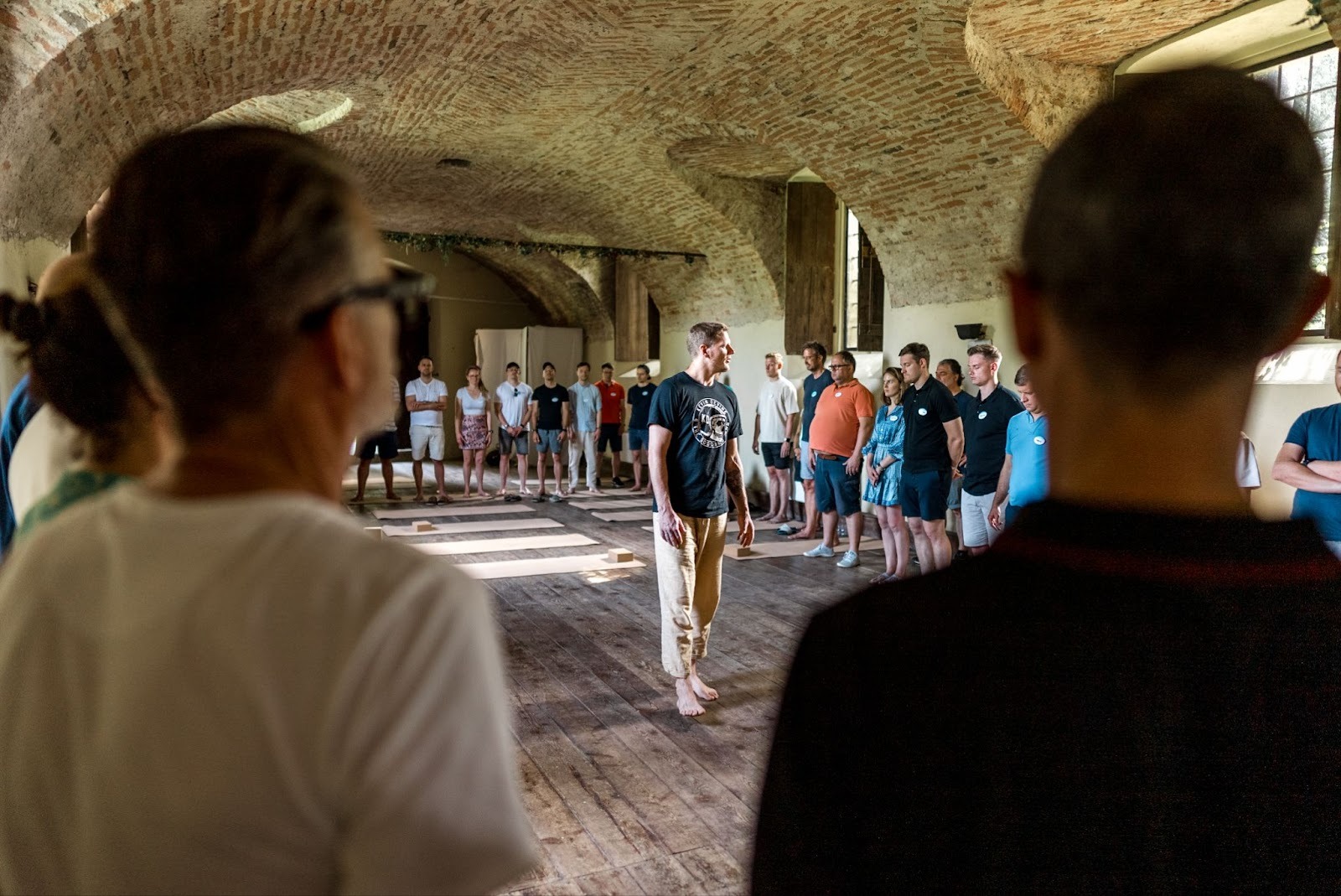
Lining up: Facilitator asks questions like “How far have you traveled to get here?” and people position themselves along an imaginary line. Why it works: Quick visual icebreaker that sparks conversation and movement. When to use: a morning kick‑off or a post‑arrival activity to energize participants.
The sun shines on: In a circle, the facilitator calls out statements (“the sun shines on people who have pets”), and those who do step forward to find a new spot. Why it works: Builds laughter, awareness of shared traits, and low‑stakes inclusivity. When to use: After a meal or at a transition point to re‑energize the room.
Dance-off. Play a fun, well‑known song and invite everyone to move, eyes open or closed. Why it works: Boosts serotonin and resets group energy without requiring conversation. When to use: Late afternoon slump or between long workshop segments.
Conversation‑driven deepening
“What I Wish You Knew” prompts around working styles. Participants share short reflections on their work style or collaboration preferences. Why it works: Fosters empathy and smoother teamwork. When to use: Mid‑retreat, once initial trust is built.
Story Circles. Small groups share short stories around curated themes (e.g., teamwork wins, moments of learning). Why it works: Builds connection through shared storytelling and pattern recognition. When to use: Toward the end of a retreat day, when people are open to reflection.
Values Speed‑Matching (short, structured rounds). Participants rotate in pairs to discuss prompts on values or motivations. Why it works: Creates quick, structured depth without time pressure. When to use: Perfect before alignment workshops or company values discussions.
A Day in the Life. Participants describe their typical workday and one thing others might not realize. Why it works: Encourages cross‑functional understanding. When to use: Early or mid‑retreat for distributed or hybrid teams.
Icebreakers that run across the whole retreat
Retreat Quest Cards. Each participant receives “connection missions” (e.g., find someone who… or notice one thing you appreciate daily). Why it works: Keeps light engagement going beyond sessions. When to use: From arrival to closing to weave connections naturally.
Secret Compliment Exchange at closing. Each person is assigned someone to observe and write a final positive note for quietly. Why it works: Ends on a note of gratitude and genuine appreciation. When to use: the closing session or the final dinner.
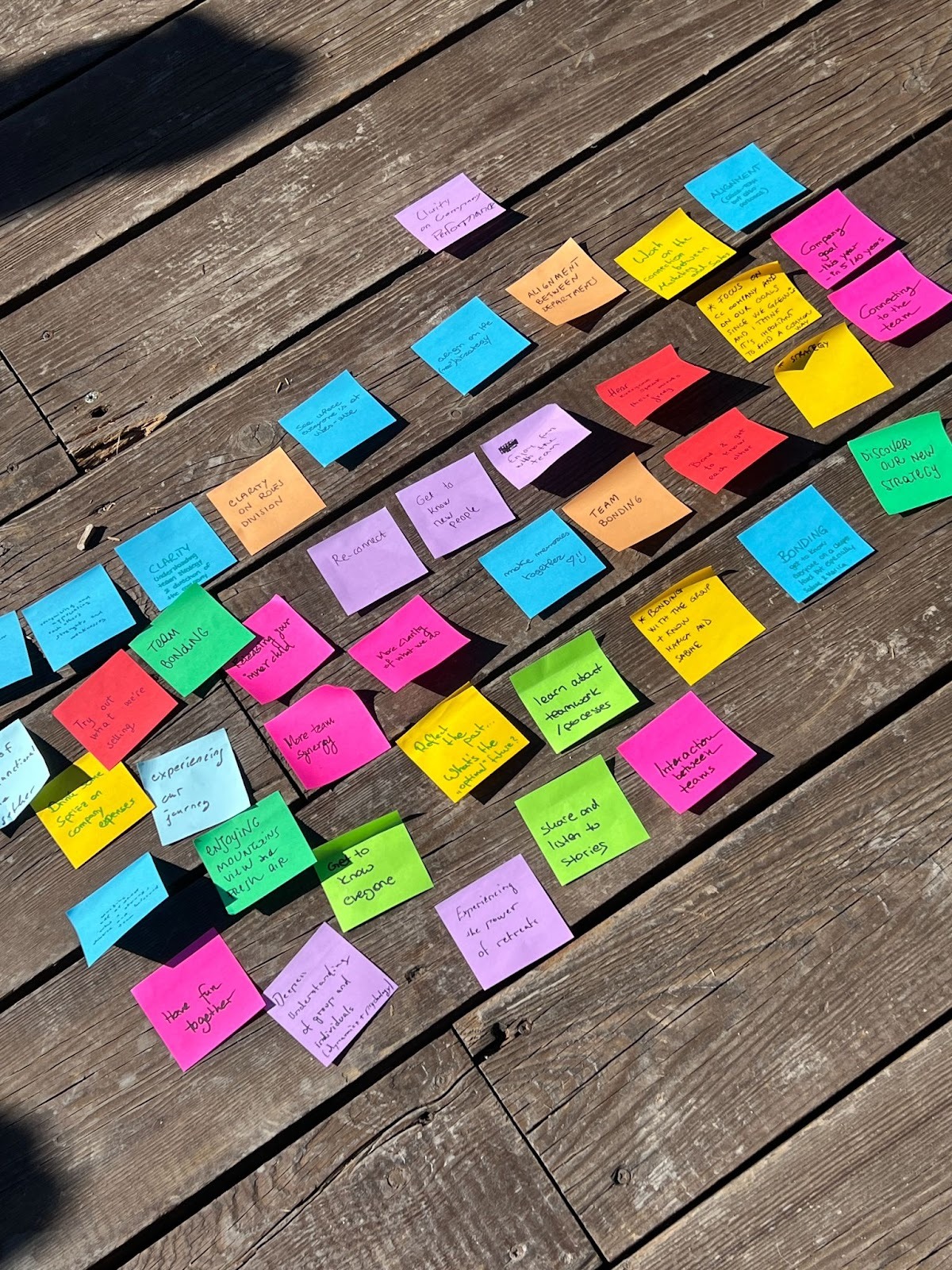
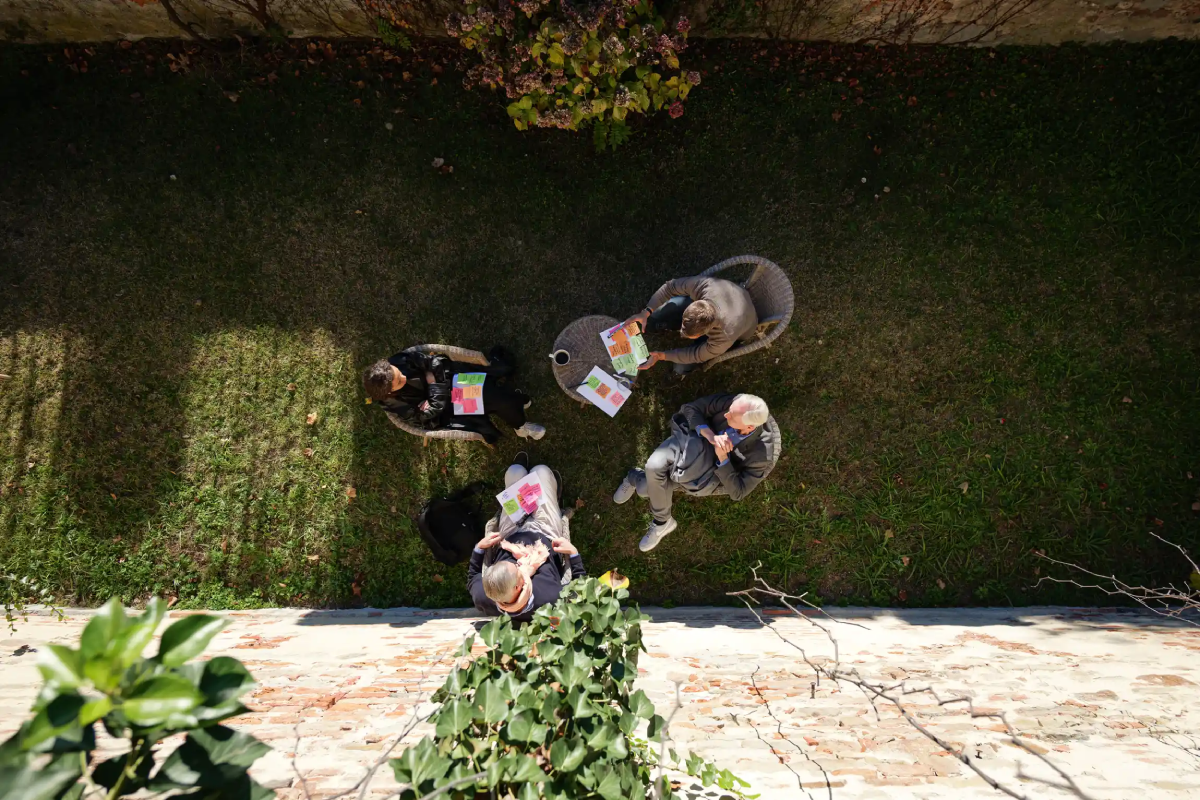
Memory Wall. Invite people to post highlights or takeaways throughout the retreat. Why it works: Creates a living story and tangible group memory. When to use: Throughout the retreat, great as a reflective closing ritual.
These are particularly powerful in creating shared memories and narrative throughout the event.
How to choose the right mix
Look at your objectives (is the event to align, bond, or create?) and think about the size of your group as well as how much time you have for icebreakers. Ideally, you want to mix and match icebreakers each day of the retreat. You can also go a bit deeper as people relax with one another throughout the gathering.
Keep in mind that the best icebreakers feel like a natural part of the event, not like a break from it. Make sure they are well thought through and bring value to your retreat. Ask yourself:
Is the activity voluntary and inclusive?
Does it match the energy and trust level of the group?
Have I explained the ‘why’?
How will I gather feedback to improve next time?
FAQ
No items found.
From practical insider warnings to new secret locations, get our monthly, genuinely spam-free newsletter.