
It’s getting harder to pretend that “business as usual” is actually working.
Right now, the world feels tense and unpredictable. News of conflicts, political divides, diseases, and economic ups and downs creates a steady sense of anxiety, eagerly spread through social media, that follows us into every Zoom call and Slack message.
As leaders and teammates, we do our best to keep going, but the truth is, we’re worn out. Our minds aren’t meant to handle a global crisis and a quarterly review at the same time.
So why on earth should you take the time to bring your team out to nature to “play in the grass?”
To foster long-term employee engagement and prevent burnout, the key takeaway is to reconsider nature as fundamental to professional survival rather than just a break from work.
When the world gets tough, our first reaction at work is often to dig in and push harder. But being in crisis mode can cause us to develop mental tunnel vision. Psychologists call this the Scarcity Mindset. When we feel threatened, whether by the news or a tight deadline, our brains focus on getting through the moment instead of thinking long-term.
Bringing a team into nature isn’t about escaping reality. It’s about giving our brains one of the rare places where they can truly relax. There’s strong evidence for this. Research on Attention Restoration Theory (ART), started by Stephen and Rachel Kaplan, shows that city life and screens wear out our focused attention. Nature, on the other hand, gently captures our interest and lets our minds recover. (The Restorative Environment: A Complementary Concept for Salutogenesis Studies, n.d.)
A University of Kansas study found that people who spent four days in nature boosted their creativity and problem-solving by 50%. (Atchley et al., 2012) They didn’t get smarter in four days, they just unplugged enough for their brains to work at their best.
One of the toughest parts of today’s world is how it divides us. In cities or on social media, we’re always reminded of what sets us apart. The political mess even shows up in our messages and lunch breaks.
Team building in nature brings everyone back on equal ground. There’s no algorithm or office hierarchy on a forest trail; everyone is mostly the same, aside from fitness levels, of course. Shared activities like hiking or building a fire help people drop their work roles and defenses. The main point: real, meaningful tasks in nature help teams truly connect and nurture psychological safety.
There’s also research on the feeling of awe. Studies show that being in the presence of something huge, like a redwood forest or a mountain range, makes people more likely to help and cooperate with others. It brings things into perspective, reminds us of our size (small), and shifts our focus away from ourselves, and encourages us to connect with those around us, even when the world feels overwhelming.
If we focus on the science bit of workplace wellness, we should mention phytoncides. These are chemicals trees release to protect themselves from decay and insects. When people inhale them, their bodies boost Natural Killer (NK) cell activity, which helps fight infections. This is supported by research.
So at the end of the day, a team retreat in the woods is more than just a fun getaway; it’s a way to help your team recover physically and mentally from stress and prevent burnout. Studies show that time in nature can lower cortisol levels, leaving people feeling refreshed when they return to work. (Introducing nature at the work floor: A nature-based intervention to reduce stress and improve cognitive performance, 2022)
We need to stop measuring retreats by “output” and start measuring them by “capacity.” We all know the saying: you can’t pour from an empty cup, and right now, many people’s cups are bone-dry.
Spending a few days in nature gives our minds a gentle reset. It helps us think more deeply and with empathy. When you swap constant notifications for the sound of wind in the trees, you’re not wasting time. You’re regaining the mental space you need to be creative.
The world will always be complicated. We can’t change the news, politics, or the economy. But we can choose where we focus. Sometimes, the best thing a team can do is step away from their desks, put down their devices, and remember what it’s like to breathe fresh air.
Nature is no longer just a luxury. For teams facing a world in crisis, it’s the best way to find balance again.
At Campfire Company, we create stable, supportive spaces through carefully planned nature retreats. Contact us to learn how we can help your team build resilience in challenging times.
From practical insider warnings to new secret locations, get our monthly, genuinely spam-free newsletter.
Subscribe now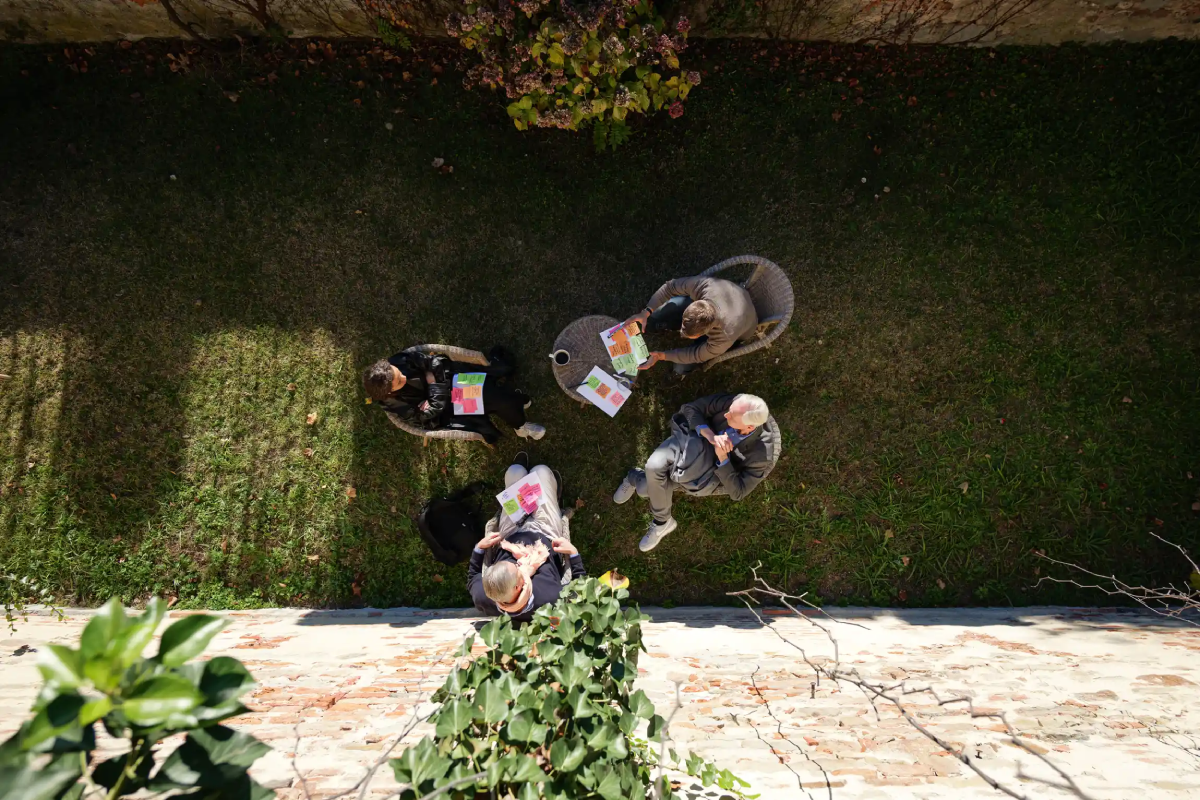
The Architecture of Psychological Safety: Why Workplace Mental Health Needs a Physical Reset
Read more


