Home
>
Blog
>
Retreat planning
>
11 Reasons Why Human-Centered Corporate Getaways Outshine AI-Powered Team Retreats
Back in 2010, the writers of the famous sitcom How I Met Your Mother imagined a future where Robots vs. wrestlers had become prime entertainment.
Fast forward 15 years, and here we are, debating whether we would rather have AI or humans organize the next team retreat. Robots, or Artificial Intelligence as it is called, are/is everywhere. Even in places where we didn't think it would impact human interactions. And it is starting to raise questions.
Over the past seven decades or so, AI has evolved from basic data entry, scheduling, and answering simple queries to providing personalized responses and even generating puns that mimic human emotions. And it is all throwing us off.
Artificial Intelligence has now penetrated our personal and professional lives. Indeed, 78% of companies reported using AI in at least one area ( 55% back in 2023).
AI's primary purpose is to automate routine, tedious, and repetitive tasks, solve problems, and analyze data, all to make human lives easier; we are not going to lie - we love it! We appreciate the fact that AI tools can now summarise our team calls, translate articles, and provide suggestions to improve our ideas and content.
AI is working 24/7, streamlining processes, operating extremely fast, scheduling, planning, and generating ideas, all while personalizing them based on past behaviours. It is already better than humans at analyzing legal documents or forecasting sales. And it does not complain about paid overtime. What's not to like?
And yet, there seems to be resistance from us humans to completely let go and trust AI to take over everything. Where is the limit? And at the end of the day, do humans want it?
If we look at industries that are customer-facing like us, such as customer service, we note that a vast majority of companies are now opting for AI support, at least for the primary interaction. It definitely reduces their cost, up to 30%, according to this piece. And yet, a majority of people (75%) still preferred to talk to a human in the fall of 2024.
Hosting platform Kinsta shared telling data in a May 2025 report:
Yes, AI is constantly improving. It's getting better by the minute, quite literally. However, that does not make it bulletproof.

Finding ourselves talking to, effectively, a machine that is slowly replacing the "need" for human interaction can enhance disconnection and isolation, a feeling that many of the latest generations, especially Gen Z, a generation that will represent a third of the workforce in 2035, seem to suffer from.
We've all experienced the frustration of begging the customer service AI bot to let us speak to a human - 48% would rather talk to a human for customer service, a recent study shows. This frustration is then reported to the company, which can lose the trust of a user simply by wanting to respond faster at any time of day or night.
AI is powerful, but it does not make it flawless.
We may think "the robot" is a better version of the human. Still, a recent study shows that AI is just as overconfident and biased as humans can be".
To continue improving, more data is required, which, of course, raises the ethical question of individual privacy. AI can guide us from point A to B but has no moral compass.
Have you ever had to go somewhere new and realize your phone had died? And suddenly you have to rely on your own skills and the help of a few kind souls on your way to reach your destination. That feeling of pride and excitement when you finally make it... might be what overdependence on AI is slowly erasing from us. It takes away opportunities for us, as individuals and teams, to come together and figure things out, all while fostering a sense of connection.
Necessity is the mother of invention... and creativity.
But if AI takes care of all the needs and fixes all the bugs, where will we draw our inspiration to create truly creative insight that will resonate emotionally with humans?
"not jumping on the AI wagon" is often cited as one of the biggest mistakes companies can make right now. But fear should not be the guide. Fear can be irrational and paralyzing, and it is never a reliable response to what is ultimately right.
"Right now, a lot of brands are in this panic mode of 'AI is going to replace everything,' so they start looking at what they can automate, where they can cut people, how they can make more for less. But AI's real power isn't in replicating old ways of working – it's in creating entirely new ones." says Yann Caloghiris, executive creative director at Left Field Labs
AI is a fantastic tool, but the magic? It remains in human hands. We strongly believe that while AI can assist, only humans can create truly meaningful, memorable, and impactful team retreats. Let us give you 14 reasons why:
"Imbued with subtle nuances, non-verbal cues and emotional undertones, human interactions are simply too complex, too biological for AI to grasp", said Multifaith chaplain Fiona Steward Darling in a 2024 interview. We tend to agree.
Can AI read the room? No. While it is improving at identifying human emotions and, at times, simulating them (simulating being a keyword here), AI does not possess consciousness, self-awareness, or genuine emotions. Humans are complicated and contradictory. We are subject to personal and cultural biases and norms, which are rooted in past experiences that are still beyond the reach of AI to perceive and anticipate.
A human facilitator will observe and notice unspoken needs through body language, sensing the energy of the group and any mood shifts that may occur. They will also hear those who do not dare to speak and be able to adjust the tone, agenda, or activity accordingly to keep everyone engaged and included.
Thanks to their lived experience, our human planners possess a deep understanding of societal dynamics, cultural nuances, personality types, sensitive topics, the need for confidentiality and tact, as well as both visible and invisible disabilities.
This contextual awareness enables them to design experiences that are genuinely inclusive for a specific group and not "according to the algorithm". At the end of the day, AI is only as good as the data it is fed, and if the people in charge of that can forget about half the population... what will AI do?
As seen above, AI can suggest things based on a combination of knowledge it has been "fed".
Consequently, while it can be vastly creative and help think outside the box, it is not capable of producing a truly original thought or vision. It is trained to favour what works, which explains why we see more and more content looking and sounding exactly the same online nowadays. So much for creativity!
During a team-building retreat, especially in a new location abroad, things can change quickly and require intuitive, real-time adjustments due to weather changes, travel delays, or simply shifting group dynamics. These adaptations require awareness, flexibility, reassurance, and a certain "grace" that AI lacks.
The goal of most corporate retreats is to foster genuine relationships through shared experiences that nurture vulnerability and, ultimately, trust. These bonds are built one shared moment at a time in real life and cannot be engineered by data.
Despite the brilliant progress AI has made in the past few years, humans still tend to have a certain mistrust of "the machine" and would rather refer to a human for the final say.
A recent study (January 2025) on the level of trust in AI in the workplace reveals that 2/3 of people trust AI to inform important work decisions; however, only 1% would trust it to make those decisions. A study that confirms our vision that AI is a tool to support human-led work.
AI can be "told" about the company culture, but it cannot "feel it".
Imagine a situation where a team culture is toxic, but leadership is oblivious to it. How will AI be able to tell?
A sense of belonging is not just built through team-building activities but also through shared meaning, genuine rituals, and authentic traditions that are true to this particular team, thanks to the unique individuals that make up the group.
Human planners can understand and align every detail of the gathering not only based on desired outcomes but also based on everything else they have observed — the unofficial and unspoken aspects that occur when teams come together.
While planning is essential and a well-thought-out agenda is important, it often happens that the spontaneous and unscripted moments are what make the best, most cherished memories. Those are the moments people feel deeply, and that is what lasts.
Once again, going back to how AI works, it relies on its capacity to process a vast amount of information (data), which is "fed" through an algorithm (rules on what to do) that a human engineer has set up. Because everyone wants to be "picked up" by the algorithm, we are all now "talking its language" (SEO), which means the AI is getting more and more information that fits that one type of model. This is why when you type in a search query around "where to go on a team retreat," you find 10 articles built the exact same way with the same list of locations.
Far be it from us to suggest these are bad recommendations. Au contraire.
However, that also means that little niche boutique places, one-of-a-kind and unknown gems, will have a lower chance of being identified. Unless... you ask our humane.
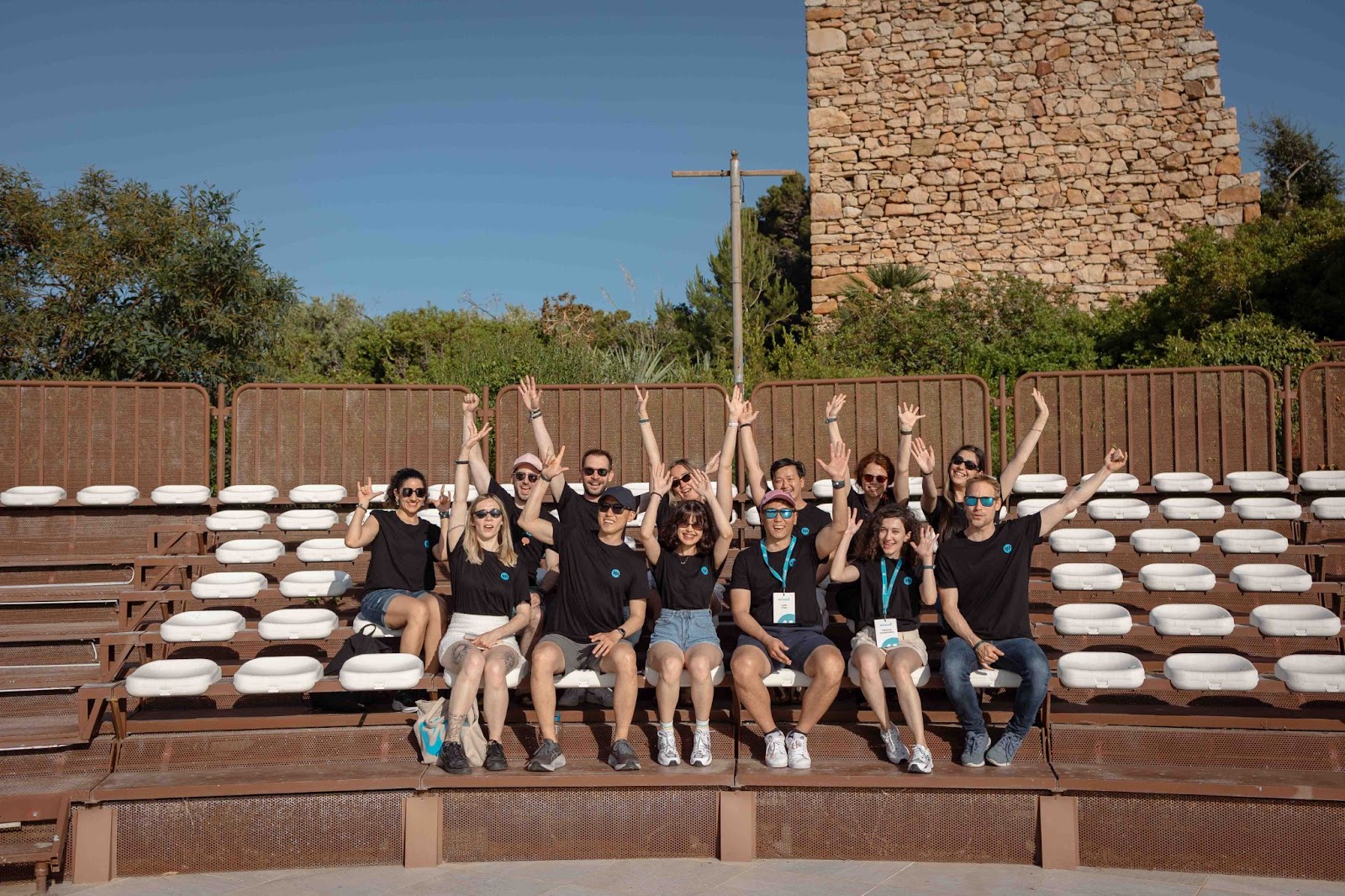
We know it's a "touchy" (pun intended) subject, and all we mean is that a handshake, a pat on the back, or a consented hug have power.
It has been proven to slow down our heartbeat, lower our blood pressure, calm our nervous centre and even lower pain while increasing the love hormone oxytocin. All of this helps nurture a sense of safety, which is essential for our well-being. AI can say the right words, but it can't replace a consensual team hug after winning a treasure hunt or a congratulatory handshake filled with pride and admiration.
The primary purpose of a company retreat is typically to step away from the day-to-day, from screens and constant device connections, rather than being led by more screens and robots. AI is excellent and all, but for instant feedback, "connected games", and in-real-time data, you basically need your team to carry their phone around all the time; in our book, that defeats the point of going all the way to a beautiful nature location to find peace and quiet from the buzzing routine.
Humans have this fascinating and, let's face it, quite irritating ability to change their minds with little reason or logic behind it other than "a gut feeling" or a "6th sense" That is part of what makes us human.
Humour us for a minute and think about it, like choosing your wedding dress or suit, if you can.
There is a style you've seen online and thought, "This is what I want", and when you try it on, you can't explain it, but it just doesn't work. And you end up with a dress or suit that is completely different from what you thought you wanted. And it just works. That is similar to putting together a successful team retreat. If you give the rain to AI, you'll end up with something perfect on paper. However, it might not fit perfectly.
AI can't deliver that because we are not even able to express it, let alone feed it to the algorithm.
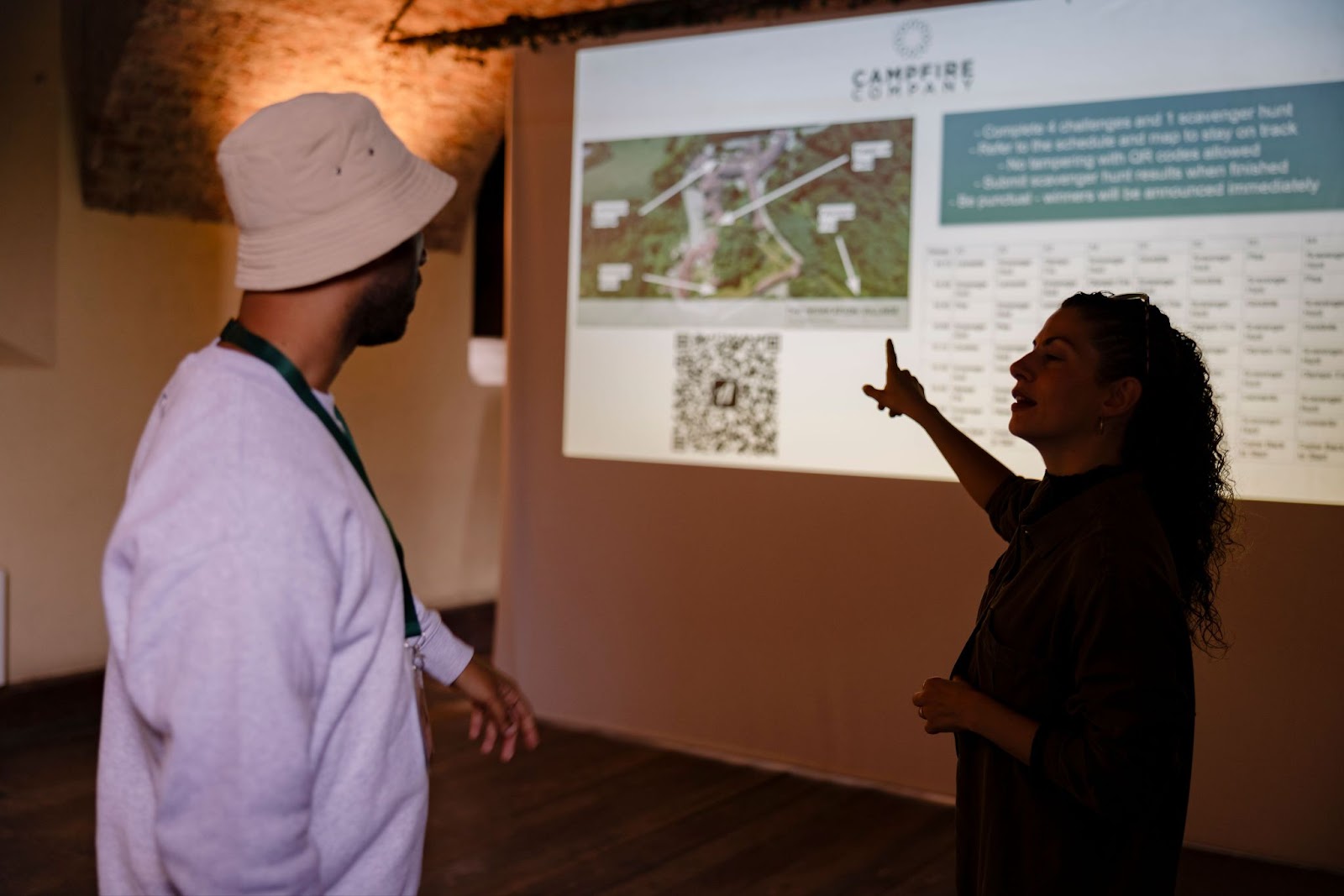
The aim of this piece is not to bash AI. We appreciate it. We understand its power, and we use it frequently. However, we are also aware that its shortcomings are our unique selling points.
Ultimately, AI is being trained to prioritize efficiency above all else. But at what cost? Efficiency without emotion is not what clients come to us for.
We are convinced that the only way forward is a human-powered team retreat with the support of AI tools in our back pocket.
Because we are in the business of making connections, we utilize AI to streamline processes and save time, which we can then spend focusing on what truly matters: you, amazing humans.
We are a human-first, AI-second company. As far as we know, AI can't start a campfire yet.
Just like a Swiss Army Knife, we’ll always have AI with us, but we won't let it steal the show - your show.
If you made it this far without asking your AI tool to summarize this piece, we hope you now understand why we believe humans are better suited to organizing and facilitating team retreats. And when we say humans, we mean those who are professionally trained. Planning and facilitating your own retreat can be an all-other can of worms.
From practical insider warnings to new secret locations, get our monthly, genuinely spam-free newsletter.
Subscribe now
%20(4).jpeg)